
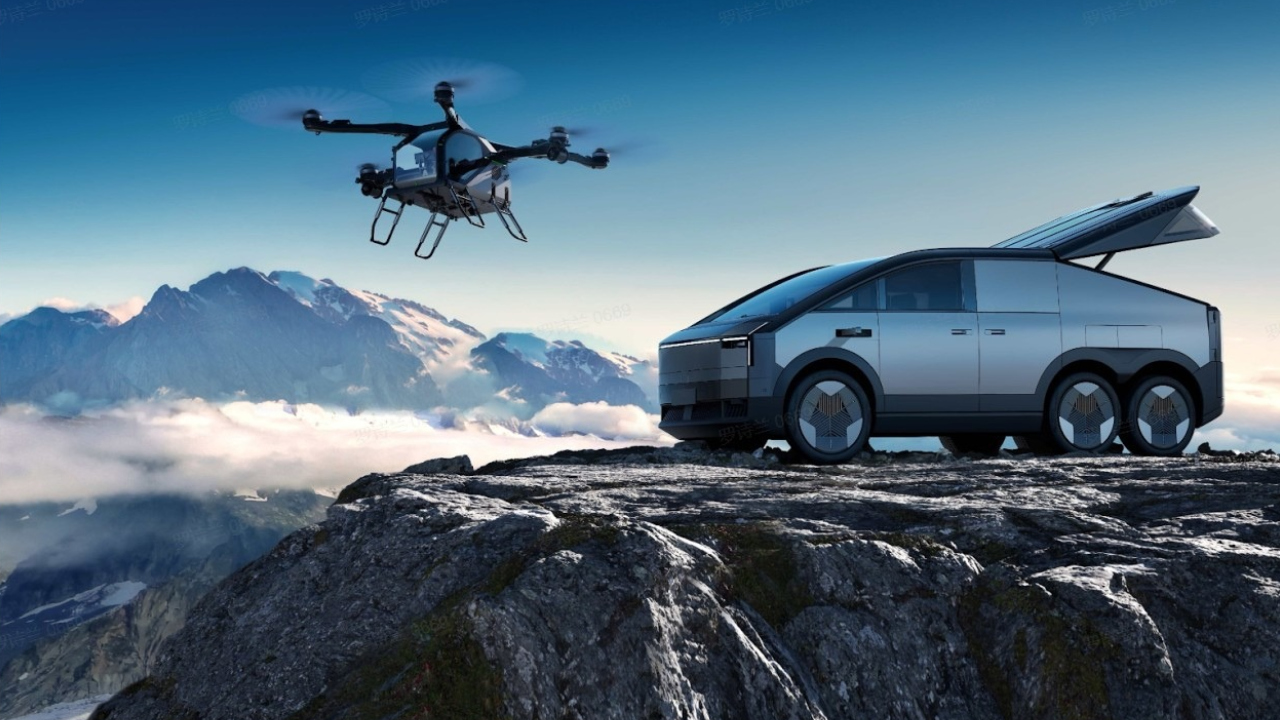
If you’ve been reading some of my stuff, you know I love a good science fiction premise as much as the next bloke who grew up watching The Jetsons. So when XPENG AeroHT rolled out their “Aridge” Land Aircraft Carrier in Beijing – a six-wheeled electric mothership that ejects a two-seat multicopter out of its trunk – the inner eight-year-old in me did a little jig. It looks absolutely brilliant. It really does. But the cynical, 51-year-old bloke in me who actually looks at battery chemistry for a living took one look at it and sighed.
Because here is the brutal, unavoidable truth that tech billionaires desperately want you to ignore: flying cars are a phenomenal feat of engineering theater, but if you actually want to use an electric battery to move something efficiently without tarmac, you shouldn’t be looking up. You should be looking down. At the water.
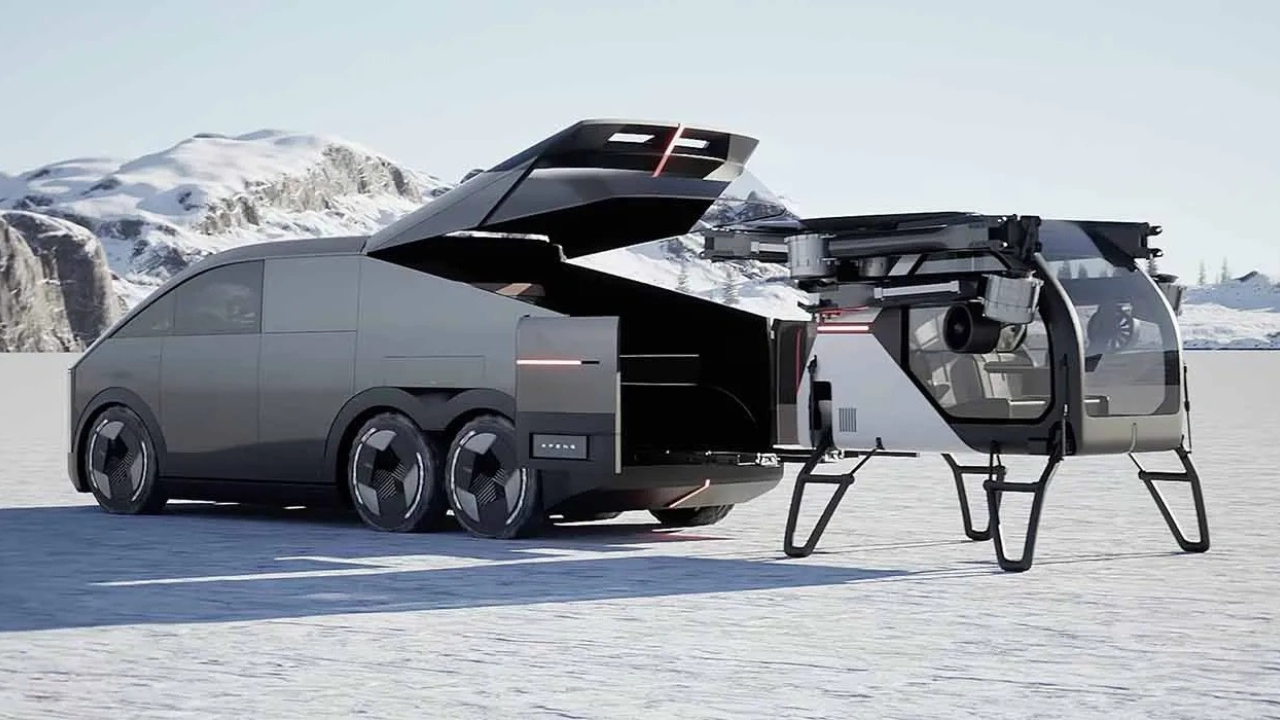
Let’s start with the Aridge Land Aircraft Carrier. It is a masterpiece of packaging. You get a massive, six-wheeled electric van that acts as a mobile charging station and hangar. In the back, tucked away like a very expensive Russian nesting doll, is a two-seat electric vertical takeoff and landing (eVTOL) aircraft. XPENG has flown the thing in Melbourne, they’ve shown it off at Auto China 2026, and they are taking pre-orders.
But then you look at the physics.
To make an eVTOL fly, you have to fight gravity. Gravity, as anyone who has ever dropped a spanner on their foot will confirm, is relentless. It does not care about your aerodynamic styling or your venture capital funding. To get two human beings and a lithium-ion battery pack off the ground vertically, you have to expend a ruinous amount of energy. The battery has to be light enough to fly, but powerful enough to lift its own weight, plus the motors, plus the passengers, plus the airframe.

This leads to the dreaded “weight spiral.” More battery means more weight. More weight means you need bigger motors (and rotors) to lift it. Bigger motors draw more power, which means you need – you guessed it – more battery. The result? A vehicle that costs as much as a small island, needs the airspace clearance of a Boeing 737, and gives you about twenty minutes of flight time before it turns into a very expensive, very fast-falling brick.
What about the new breed of hydrofoiling electric vessels?
Water is thick. It’s heavy. Pushing a traditional displacement hull through the water takes a lot of energy. But water also offers something air doesn’t: buoyancy. You don’t have to spend a single watt of electricity just to keep the vehicle from plummeting to its doom. The water holds it up for free.
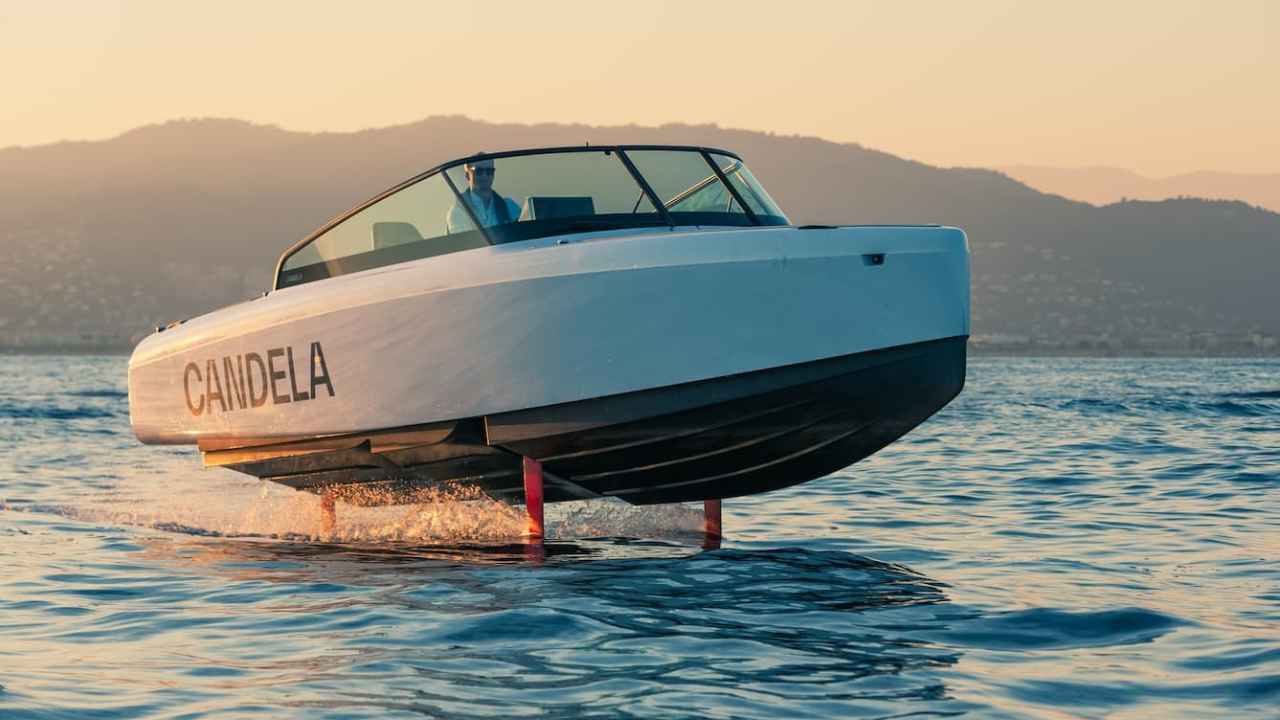
When you add hydrofoils to the mix, things get truly interesting. A hydrofoil is an underwater wing. As the boat speeds up, the hull lifts entirely out of the water, resting only on the foils. This cuts drag by up to 80%. Suddenly, that heavy, energy-dense lithium battery isn’t fighting to lift itself into the clouds; it’s just gently pushing a highly aerodynamic shape over a frictionless surface.
Take a company like Candela. Their C-8 electric hydrofoil uses a Polestar battery pack – the same one you’d find in a luxury EV. Because it’s foiling, it uses a fraction of the energy of a traditional speedboat. It glides silently over the waves at 25 knots, producing no wake, no noise, and no emissions, and it can do it for two and a half hours on a single charge.
Let’s compare the two then…
If you want to cross a bay in a flying car, you have to file a flight plan, secure a landing pad, pray the wind isn’t gusting over 15 knots, and spend the whole flight staring nervously at a battery gauge that is dropping faster than the pound sterling after a budget announcement. If something goes wrong with a flying car, you make a rather dramatic, unscheduled return to Earth.
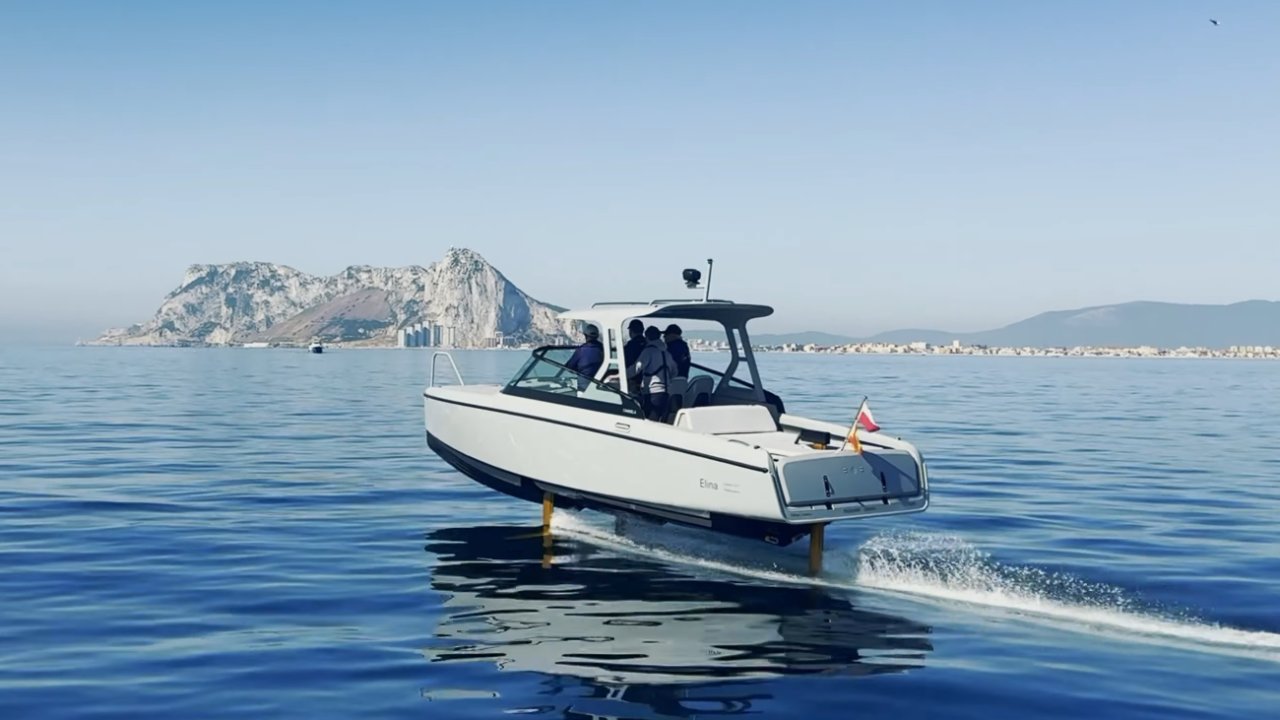
If you want to cross that same bay in an electric hydrofoil, you untie the dock lines, push the throttle forward, and glide across in near-silence. If the battery dies, or a motor fails, you don’t plummet from the sky. You just… stop. And bob around a bit. You might have to endure the indignity of calling a tow service, but you won’t need a parachute.

And then there is the cost. The XPENG Aridge Land Aircraft Carrier is expected to cost north of $140,000 (roughly €130,000 or £110,000) just for the “car” bit, with the flying module pushing the total package to $280,000. A high-end electric foiling boat isn’t cheap – you’re still looking at a six-figure sum- but it operates within existing maritime regulations. You don’t need a pilot’s license, you don’t need a helipad, and you don’t need to convince the Civil Aviation Authority that you aren’t going to accidentally decapitate a flock of pigeons.
The tech world is obsessed with the sky because the sky represents the ultimate freedom. It’s sexy. It looks great on a pitch deck. But the reality of physics dictates that shoving heavy batteries into the air is a fool’s errand for anything other than short, incredibly expensive novelty hops.
But let me be clear: I am not saying the physics of flying cars will be impossible forever. The equation might change. If – and it is a massive, capital-I “If” for now – we can get battery technology past the magical 750 Wh/kg energy density threshold, the weight spiral begins to untangle. Suddenly, you have a battery light enough to lift itself without requiring motors the size of industrial washing machines. But we are talking about a second, perhaps even third, generation of solid-state batteries here. It is brilliant pub talk, but it is not something you are going to park in your garage before the end of the decade.
So, I must applaud XPENG and their Aridge division. Really, I do. Without their deep pockets and refusal to accept that the sky is out of bounds, we probably wouldn’t even be looking at aviation as our next frontier. But as much as I am a patient man, I am getting old fast, and my chances of actually flying one of these things without a team of engineers standing by with a fire extinguisher are shrinking by the minute. But sailing an electric hydrofoil boat? Well, that I can do tomorrow. And I can actually enjoy it, rather than spending the entire trip terrified of gravity collecting on its debt.