
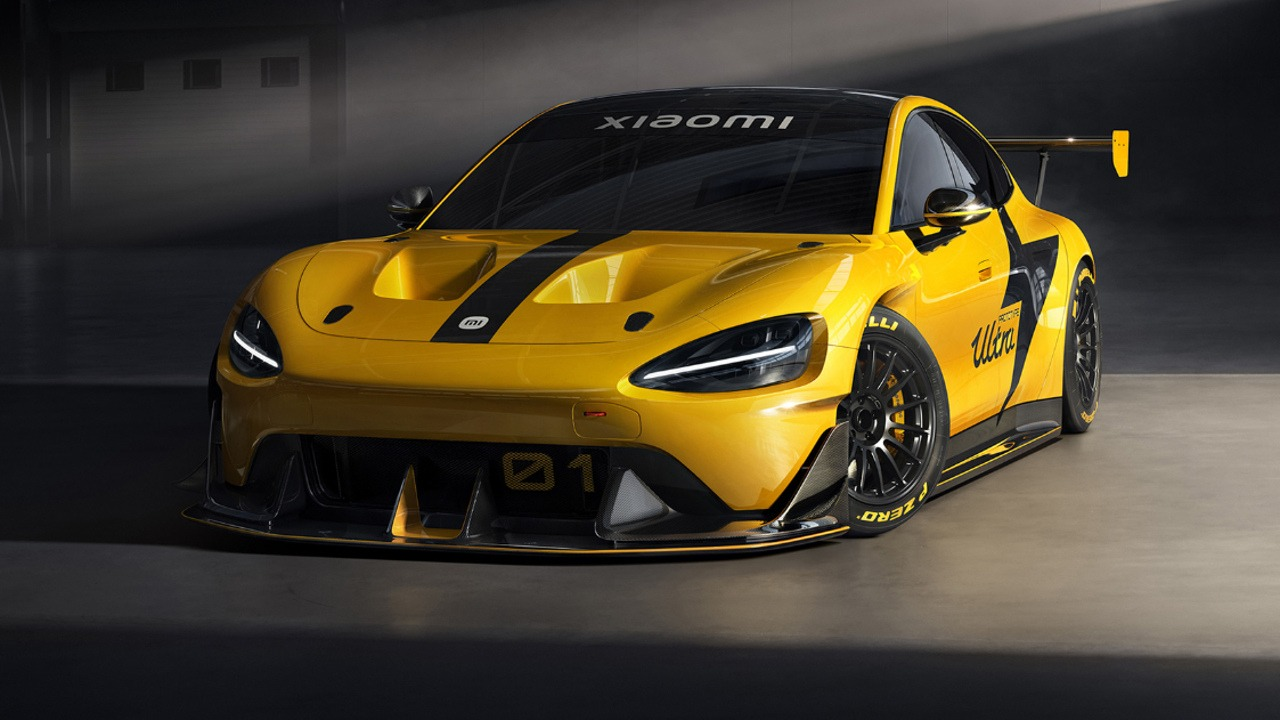
When a car company wants to prove a new vehicle won’t spontaneously melt or violently explode, they drag it to the Middle East. It’s the ultimate crucible of blistering heat, abrasive sand, and drivers who consider the speed limit to be a suggestion. So, when Xiaomi – a company you probably know best for selling you a very reasonably priced electric toothbrush or a smartwatch – decided it was time to step out of its Chinese stronghold, they didn’t head for the mild, damp, and perfectly paved roads of good old England. Nope. They packed their bags and headed straight for the unforgiving, wealthy, and very demanding United Arab Emirates. It’s a brilliant (if slightly unhinged) baptism by fire. Because if your brand-new chassis doesn’t warp in Dubai, it will probably survive Tuesday in Europe.
Up until now, Xiaomi’s global automotive ambitions were only rumors whispered around the water cooler. But on November 6, 2026, the switch was officially flipped. Lei Jun, alongside Group President Lu Weibing, formalized the creation of an International Business Division. They put VP Dr. Yu Liguo in charge, reporting directly to the top brass. The planning phase is dead and buried, and operational execution has well and truly begun. The paperwork is signed, the suits are mobilized, and the corporate war room is fully operational. They are coming, and they aren’t faffing about.
Dubai Is the Crucible, Not the Endgame
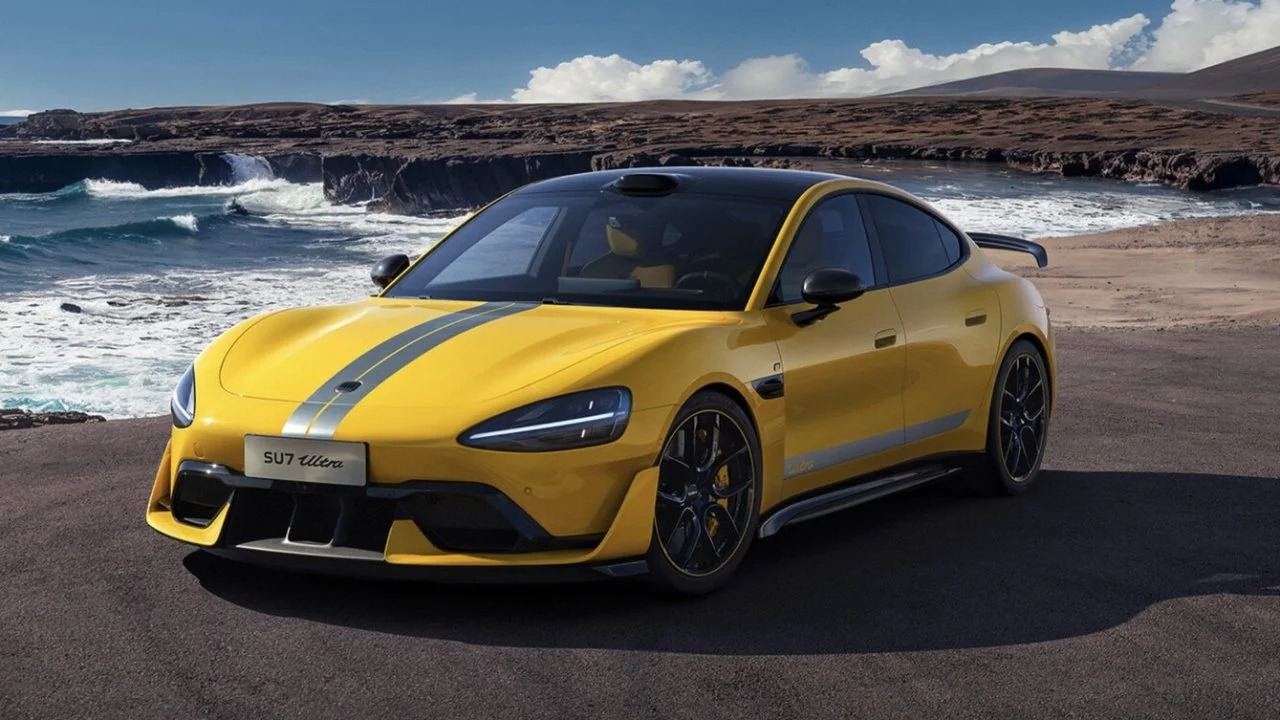
Let’s ground this in some scale. You might think Xiaomi is just dipping a wee toe in the automotive waters, building a few glorified golf carts. You’d be dead wrong. Since early 2024, they have delivered over 700,000 electric vehicles in China. In October 2026 alone, they pushed 50,100 cars out the factory doors. That is absolute industrial witchcraft. They are building complex electric cars faster than I can burn my morning toast. And remember, they only “just” started. Most legacy automakers take half a decade to figure out how to put a badge on straight.
Back to Dubai. Lei Jun confirmed their 2027 international ambitions at the APEC CEO Summit over in Shenzhen, but the real boots-on-the-ground invasion is happening in the UAE right now. Xiaomi teamed up with local distributor Gargash Prime Automotive to open presales for the entire lineup. This is the first time the SU7 sedan, the YU7 SUV, and the massive SkyNomad extended-range SUV have been officially sold outside of the Great Wall. By handing the oily, annoying bits – like parts logistics, servicing, and retail – to an established regional dealer, Xiaomi is cleverly dodging the headache of building a direct-sales network from scratch. They are using this market to stress-test their hardware before unleashing it on the incredibly picky European buyers. Deliveries for the SU7 Standard, SU7 Ultra, YU7 Standard, and a few SkyNomad trims land in December 2026.
990 HP and Six-Figure Ambitions
Now, let’s talk cash. I honestly thought Xiaomi was going to undercut everyone and sell these things from a bargain bin, and I wasn’t prepared for a shock. The SU7 Standard kicks off at 169,900 AED ($46,250/€39,500/£32,950).With export duties, shipping, and currency games, these prices show a steep 40% markup over what they charge in China. Xiaomi is looking the premium European brands dead in the eye and demanding the exact same sort of money. Asking a punter to drop six figures on an electric sedan from a phone manufacturer needs some serious confidence. They don’t have a century of racing heritage to lean on; the chassis, software, and interior have to be flawless from day one. If the stitching on the seats is wonky, the buyers will walk. If you’d rather not empty your savings, leasing the base SU7 starts at 3,899AED ($1,060 / €907 / £756) a month.
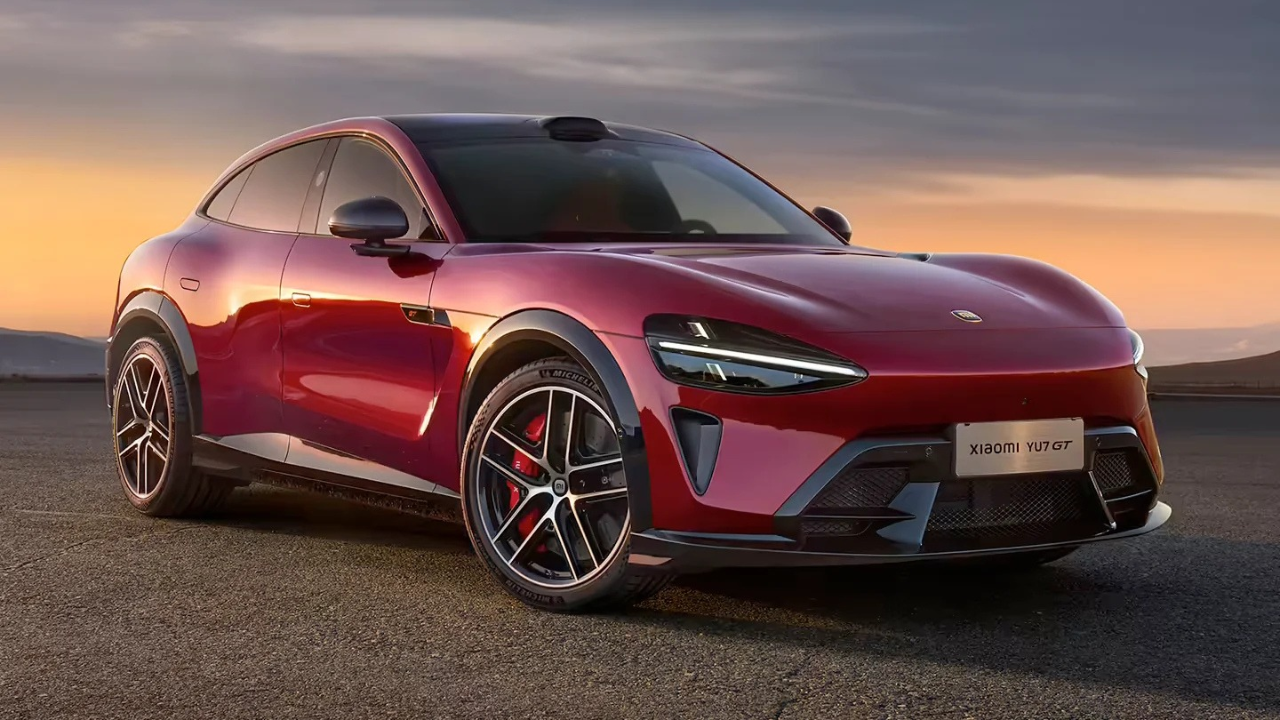
Then there’s the YU7 SUV, stepping right into the highly lucrative and ruthless family-hauler segment. It starts at a bold 184,900 AED ($50,340 / €42,976 / £35,860). This is not a small, apologetic wee crossover. It’s a slab of machinery. It measures 4,999 mm (196.8 inches) in length, 1,996 mm (78.6 inches) across, and sits on a 3,000 mm (118.1 inches) wheelbase. Park it next to a Tesla Model Y, and Elon’s pride and joy looks like a cramped little hatchback. The Model Y is 4,790 mm (188.6 inches) long, 1,920 mm (75.6 inches) wide, with a shorter 2,890 mm (113.8 inches) wheelbase. The YU7 bullies its way straight past the compact class and plants its flag in mid-size luxury territory.
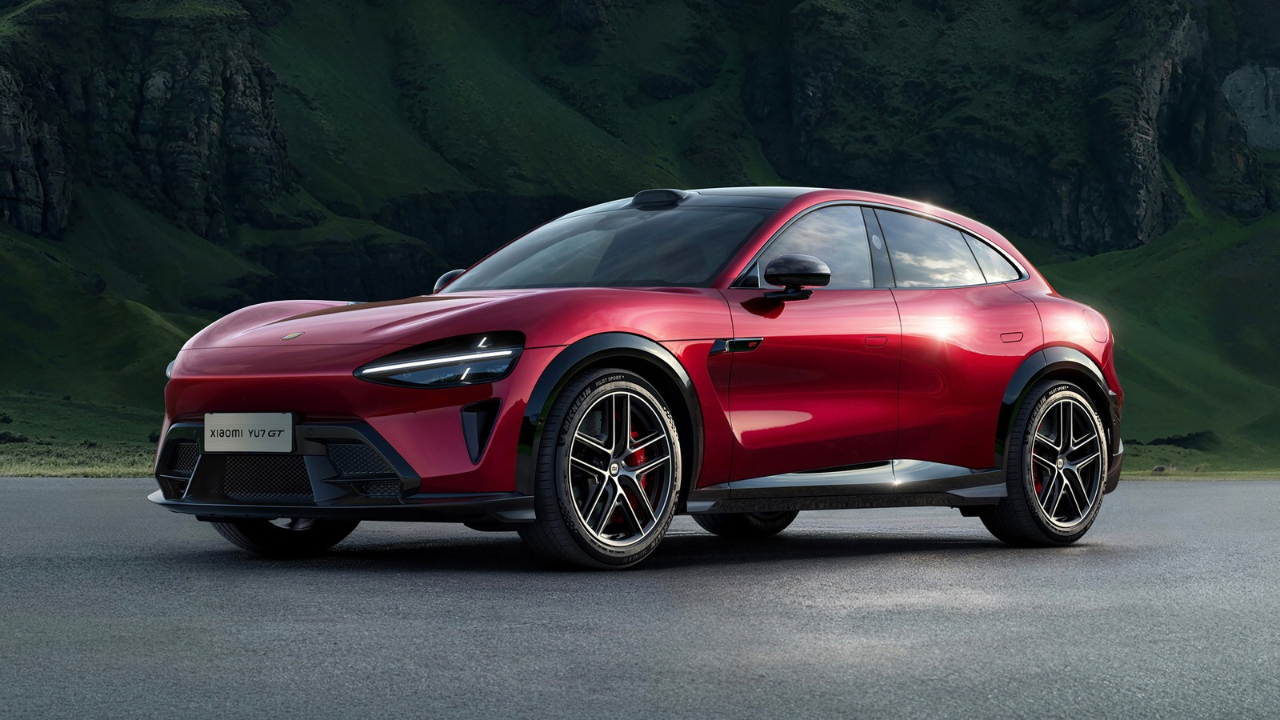
But what genuinely borders on the certifiably insane is the YU7 GT. Some lunatic in the engineering department decided it was a brilliant idea to give a family SUV 738 kW (990 hp) and a spine-snapping 1,068 Nm (787 lb-ft) of peak torque. Not too long ago, you needed a multi-million-dollar supercar and a racing license to experience that kind of power. Now, we have somehow reached a braw new era where a thousand horsepower is casually bolted into something designed for the morning school run. It’s a terrifying amount of shove. It demands absolute respect from whoever happens to be behind the wheel, lest they accidentally launch themselves, their dog, and their weekly groceries into low Earth orbit.
SkyNomad: The 1,328 km Range-Anxiety Killer
I am, however, far more intrigued by SkyNomad. This is Xiaomi’s pragmatic, thoroughly sensible answer to the sweating, panic-inducing reality of range anxiety. By putting a 1.5-liter turbocharged petrol generator under the hood, they’ve built a bridge for folks who aren’t quite ready to trust a public charging network. The entry-level five-seat SkyNomad N70 goes for 209,900 AED ($57,155 / €53,600 / £44,800). It’s a brilliant bit of kit, a proper grand tourer for the anxious modern age, but if you want real estate, you have to look at its big brother.
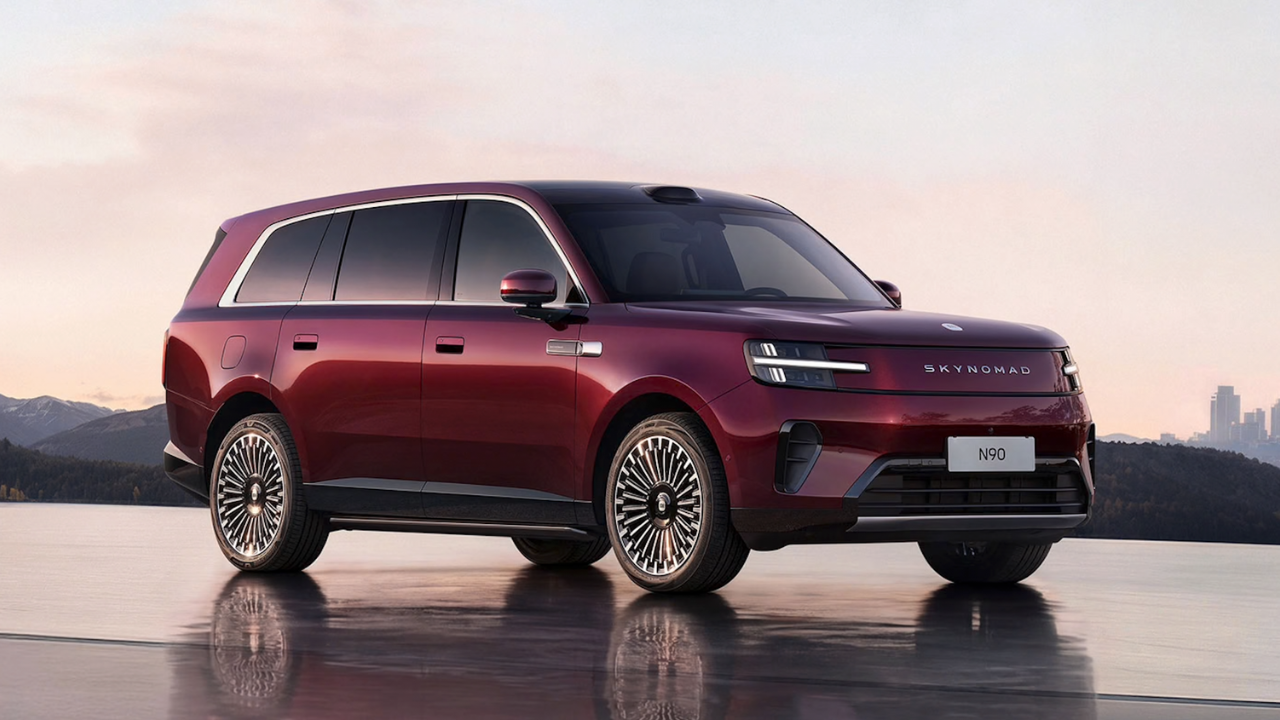
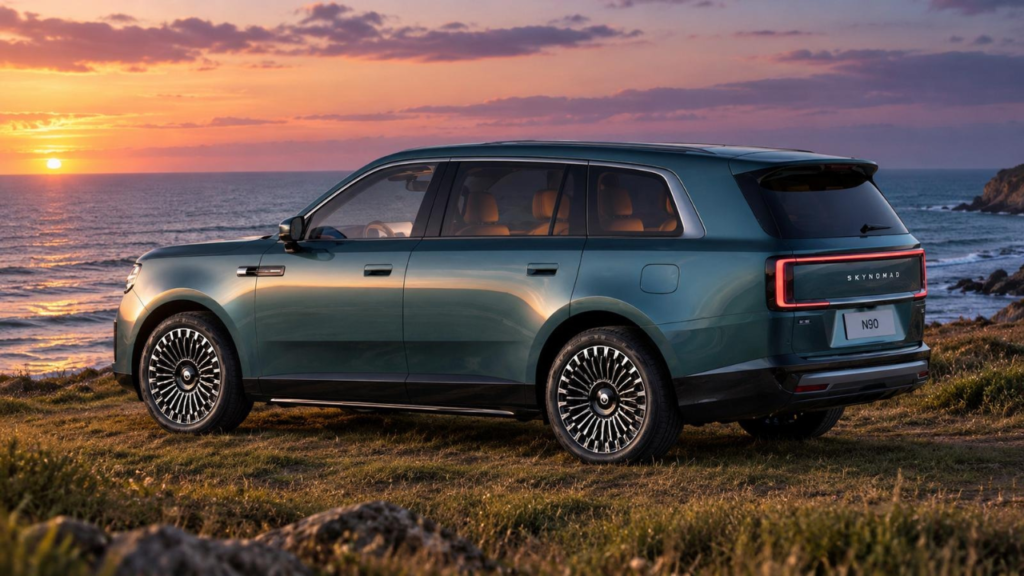
The seven-seat SkyNomad N90 – you are looking at a vehicle of glacial proportions. It stretches to 5,285 mm (208.1 inches) in length, has a 3,080 mm (121.3 inches) wheelbase, and crushes the scales at 2,840 kg (6,261 lbs). This puts it in the same size bracket as the Cadillac Vistiq. The electric Caddy is similarly vast at 5,222 mm (205.6 inches) long with a 3,094 mm (121.8 inches) wheelbase, weighing in at 2,870 kg (6,327 lbs). These aren’t just cars, folks. They are mobile, luxuriously appointed living rooms designed to isolate you from the noise and bother of the outside world.
The N90 sports a 76 kWh NMC battery that delivers between 363 km (225 miles) and 370 km (230 miles) of pure-electric range under the WLTP cycle. When the electrons run out, that petrol generator wakes up, sips from a 60-liter (15.8 US gallons) fuel tank, and pushes the combined WLTP range to a very reassuring 1,328 km (825 miles). If you believe the wildly optimistic CLTC cycle, it’ll do 1,705 km (1,059 miles). And just to sweeten the deal, Gargash Prime offers a warranty of 5 years or 150,000 km (93,205 miles), with maintenance covering the first 60,000 km (37,282 miles).
The Munich Bunker and the 2027 European Beachhead
But make no mistake, this UAE adventure is just the opening act. The real battleground is Europe, and Xiaomi has been quietly building a fortress in Munich. They have a 50-person R&D and Design Center there, and it is most certainly not a PR liaison office filled with marketing fluff. This bunker is run by Rudolf Dittrich, the former boss of the BMW M4 GT3 program. He’s joined by BMW i8 UX designer Kai Langer, and a bunch of exterior and dynamics wizards poached directly from Porsche, Lamborghini, and Rolls-Royce. When you hire the guy who made the M4 GT3 handle properly, you aren’t building a sloppy, wallowing barge that falls over in the corners. You are building a precision weapon.
The logistical puzzle for Xiaomi’s 2027 European assault is coming together pretty quickly. Back in September, at IFA Berlin, they signed memorandums of understanding with eight of Germany’s absolute biggest dealership groups, including heavyweights like Emil Frey Germany, Ernst Dello, LUEG Mobility, and Hahn Automobile. They aren’t faffing about with trendy pop-up stores; they are building a huge retail beachhead for the second half of 2027. Oh, and for those of us sitting on the damp, right-hand-drive islands of the UK, they’ve penciled us in for 2028, and they’re already hiring legal and finance staff down in Sydney, Australia, to prep the RHD markets. Lei Jun is playing a patient, strategic long game. The hardware is serious, the talent is world-class, and the pricing proves they aren’t hunting for bargain buyers. The establishment should be very, very afraid – they aren’t fighting some fast cars here – they are fighting Xiaomi’s unified “Human × Car × Home” ecosystem backed by Bavarian chassis tuning.