
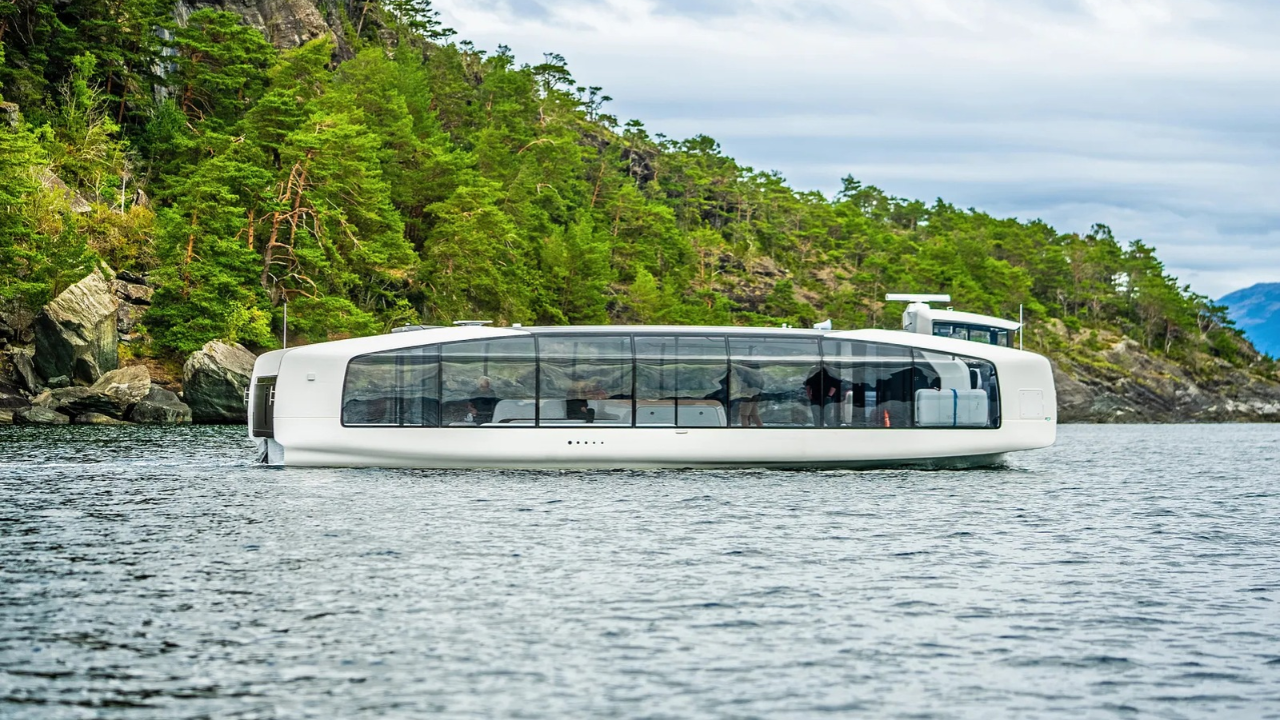
Water. It covers roughly seventy-one percent of our lovely little planet, yet our primary method of getting across it involves either building a huge concrete bridge or squeezing onto a rust-bucket diesel ferry that smells like a cocktail of old French fries and a 1980s tractor. The maritime industry has been dragging its heels when it comes to electrification. Why? Because charging a commercial boat means a PhD in electrical engineering and a custom marine plug the size of a municipal dustbin. But the clever, and very pragmatic Norwegians at a company called Hyke have looked at the booming global EV car industry, and said: “Why don’t we use a daft car charger?”
Those brilliant minds over at Hyke have officially unveiled the F-15 Business and Lounge editions of their electric passenger ferry. And the best part about this sleek vessel isn’t actually the minimalist Scandinavian design, the plush seating, or the whisper-quiet operation. It is the glorious fact that it charges using a completely standard CCS2 fast-charging plug. The same plug you would use to juice up your Honda, your Tesla, or your VW at the local supermarket.
Instead of forcing coastal marinas and city councils to install bespoke, proprietary, and astronomically expensive marine charging pedestals that will one day break and never be repaired, Hyke has partnered with Aqua superPower to turn the dock into a standard EV charging station. You simply pull this beautiful vessel up to the pontoon, tie off the lines, and plug it in just like you would a Nissan Leaf. It supports 150 kW DC fast charging – that’s enough to get a decent top-up in under an hour while the passengers are disembarking. For slow overnight stops, it also has a 22 kW AC onboard charger. So brilliantly simple.
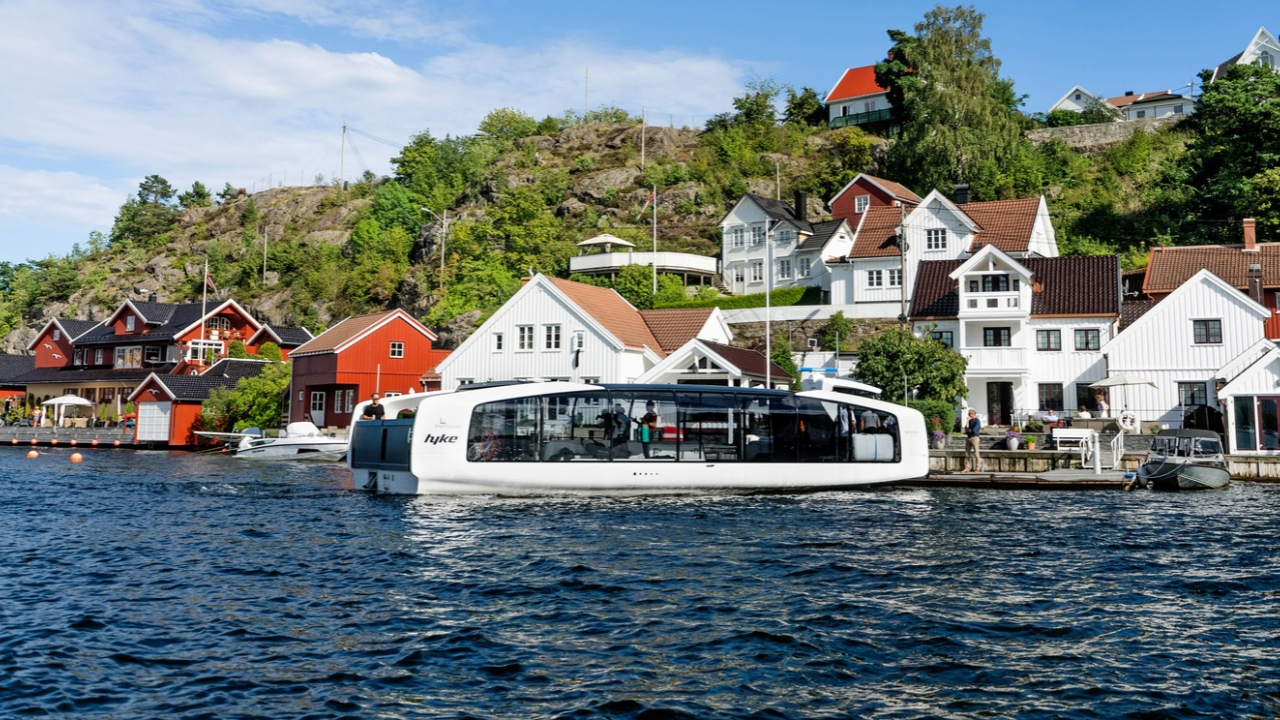
But let’s look at the boat itself, because it is a bit of a masterpiece in modern packaging. The F-15 platform is constructed entirely from lightweight GRP (glass-reinforced plastic) composite. It tips the scales at a relatively light 11,000 kilograms (24,250 pounds) for its lightship class. From bow to stern, the vessel measures 14.9 meters (48.8 feet) in overall length. If you opt for the standard commuter Shuttle version, you can pack up to 50 people on board, but the newly announced Business and Lounge versions are all about personal space and high-end luxury. They cap the passenger count at a very exclusive 20 to 25 people, leaving a huge available payload capacity of 5.5 metric tons (12,125 pounds).
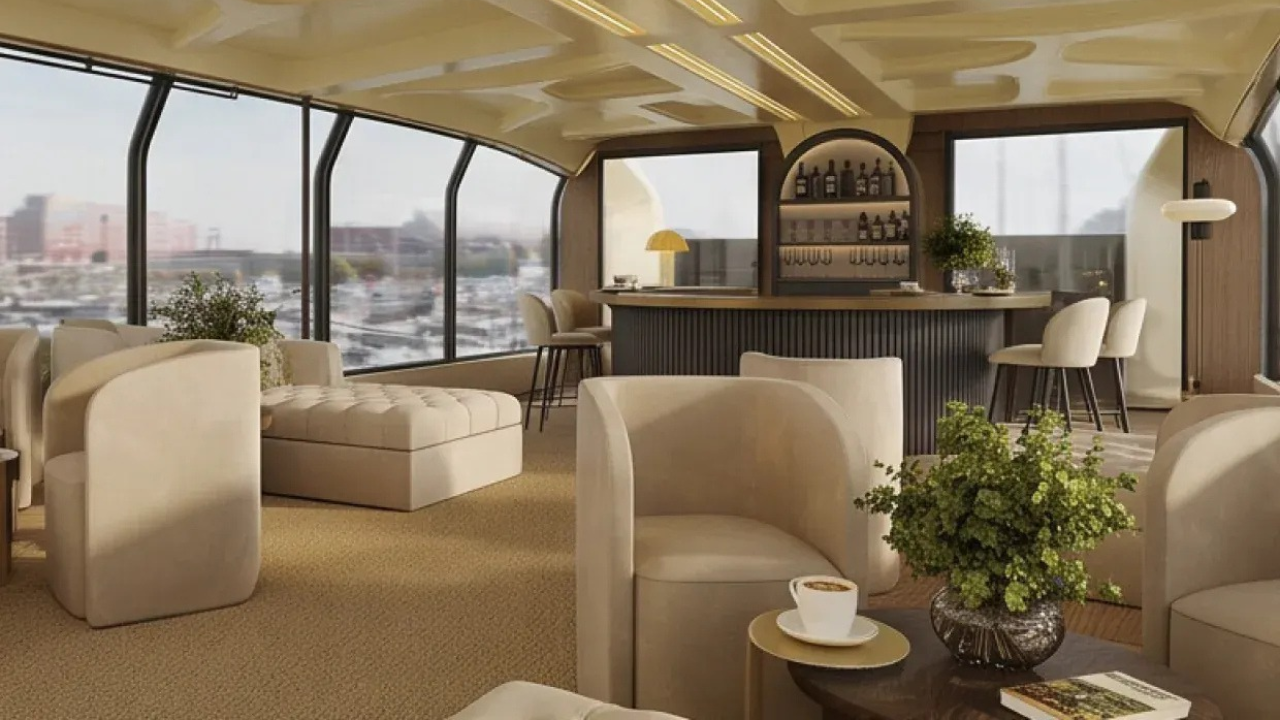
The Business edition is obviously aimed at corporate mobility, private groups, and executive airport transfers – it’s a floating first-class airline lounge for moving CEOs across the bay without getting their brogues wet. Inside, it feels more like a high-end Scandinavian boardroom than a boat. The Lounge edition, on the other hand, is tailored for luxury hotels, high-end resorts, and premium sightseeing operators. It has a more relaxed onboard environment, flexible seating arrangements, and large panoramic viewing areas so tourists can actually enjoy the scenery. Both editions are completely modular, meaning a commercial operator can customize or swap out the interior without having to commission a completely bespoke hull.
Now – the most exciting bit – the propulsion. This is where the physics of going slow on water actually works in our favor. To push a boat through water at high speed takes a battery-draining amount of energy. The drag coefficient of a displacement hull increases exponentially the faster you try to move it. But the Hyke F-15 doesn’t do high speed, nor does it want to. It has a relaxed, dignified service speed of just 5 knots (about 5.7 mph or 9.2 km/h).
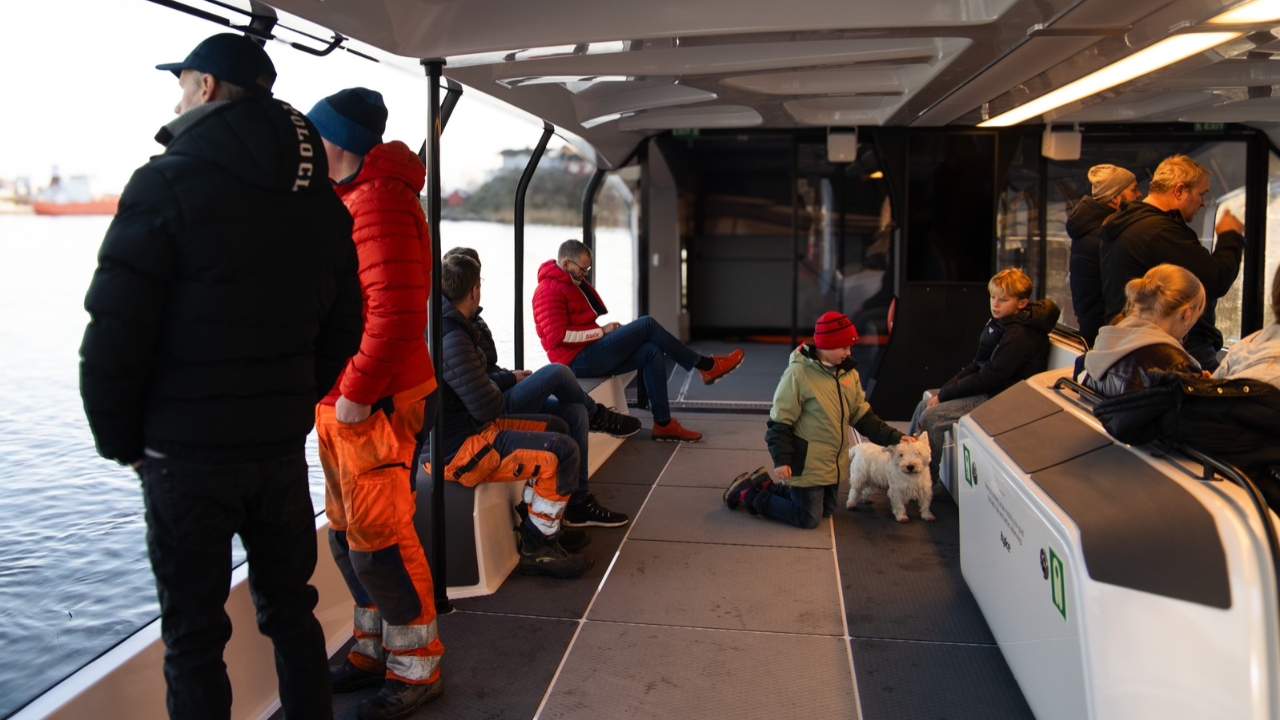
To achieve this peaceful pace, it uses an advanced twin or triple azimuth electric pod setup pushing out between 60 kW and 100 kW of total power (roughly 80 to 134 horsepower). And since azimuth pods can rotate full 360 degrees, the maneuverability is spectacular. A skilled captain can spin this 14.9-meter vessel on a wee dime, parallel park it against a pontoon in a crosswind, or hold it perfectly stationary against the current while passengers step aboard. As for acceleration times? Well, getting from zero to 5 knots takes… eventually. A vessel like this is not for drag racing – it’s all about preserving the champagne in your glass.
And because it moves at a walking pace, the energy consumption is absolutely laughable. At service speed, the F-15 draws roughly 14 kWh per hour – that’s a continuous power draw of 10 to 14 kW. As Hyke brilliantly points out, that is the equivalent power draw of just five standard household hair dryers. My tiny Honda Super-N can drain its 26 kWh battery in less than an hour when I get too excited… With the F-15 you are moving 11 tons of a boat and 25 wealthy tourists through the water using the exact same amount of electricity it takes to dry a bridal party’s hair. That is proper efficiency.
Powering these nautical hair dryers is a 196 kWh (gross) battery pack that is fully DNV Type Approved for strict marine safety. Because the continuous draw is so low, that single battery gives the F-15 a range of 50 nautical miles (57.5 miles or 92.6 kilometers). In practical commercial terms, Hyke claims it can run for 10 or more hours of continuous operation on a single charge. If you spec the optional 7 kW (peak) solar panels integrated into the roof, you get even more free, trickle-charge juice straight from the sky to power the onboard HVAC and lighting.
The real-world results are already in, and they are incredibly damning for the fossil fuel crowd. Before rolling out these luxury editions, Hyke spent 14 months testing the standard Shuttle version in Fredrikstad, Norway, and carried more than 41,000 real-world passengers. The passenger satisfaction score was a glowing 4.72 out of 5, which makes perfect sense when you realize nobody was choking on diesel fumes or being vibrated to pieces by a rumbling engine. More importantly, the electric F-15 consumed up to 88% less energy per passenger-kilometer than the old diesel ferries it was benchmarked against. 88 percent is not a marginal, feel-good gain – it’s a financial bloodbath for internal combustion.
It is no surprise then that the commercial orders are already rolling in. Over in Haugesund, a joint venture named Cityboat has already placed a firm order for a Shuttle version to run their tourist services, with delivery planned for the end of 2026. And with the company recently winning the Most Promising Start-Up Award at the Autonomous e-Mobility Forum in Doha, it is clear that the wealthy, waterfront-heavy Middle Eastern market is eyeing these luxury Lounge variants very closely.
As for the price, commercial marine contracts are usually guarded like state secrets, and Hyke builds these to order. But if you want to add one of these beauties to your island resort’s fleet, you should expect to write a check in the neighborhood of $1,500,000 (roughly €1,400,000 or £1,180,000) depending on just how much mahogany, leather, and premium tech you need in the Lounge. I know – it is a big upfront capital expenditure. But when your “fuel” comes from a standard car charger and your maintenance schedule consists of wiping down the seats and occasionally running a software update, the total cost of ownership over a decade plummets like a stone.
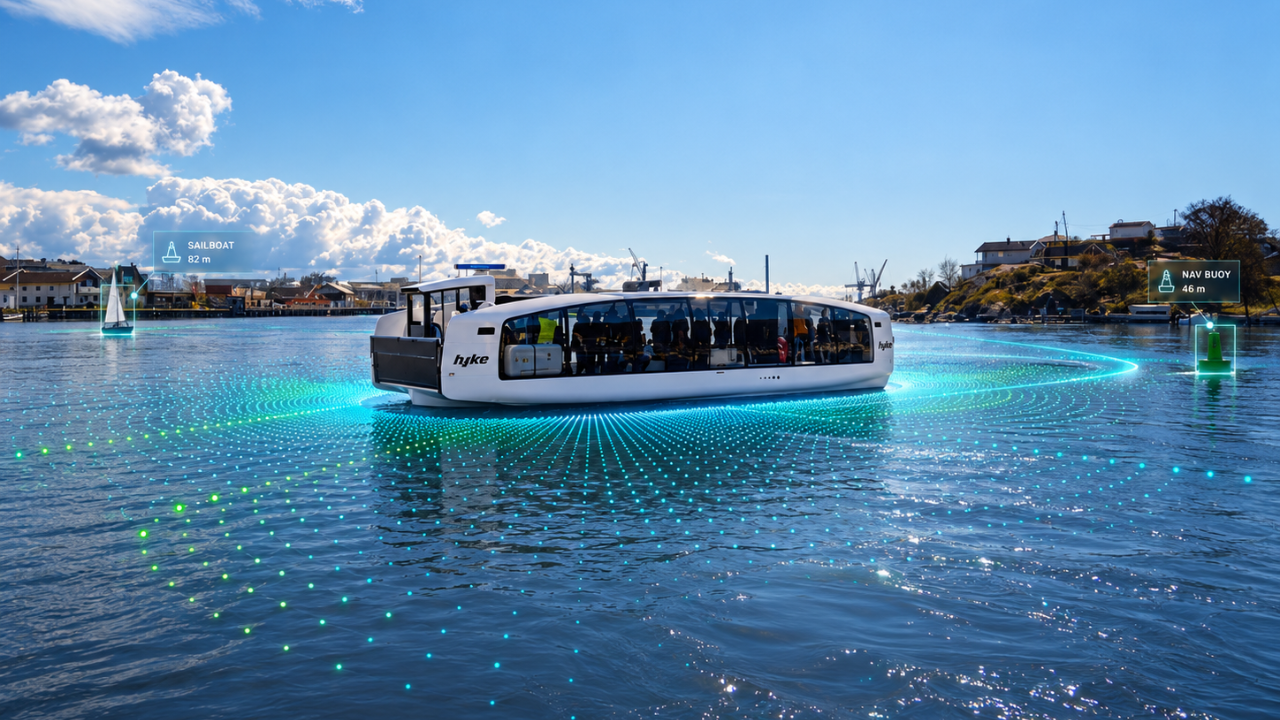
Oh, I almost forgot about the software. The F-15 platform is built with an autonomous-ready architecture. As Hyke CEO Halvor Vislie rightly points out, “From airport transfers to inner-city transport, the shortest route between communities is often over water.” By designing the boat for the future, they are making sure it won’t be obsolete in five years. Right now, maritime law dictates you still need a human captain at the helm, but the autopilot, situational awareness sensors, and drive-by-wire controls are already baked right into the hull. The goal is to seamlessly transition to fully autonomous operation with a remote safety guide on shore, which will cut operating costs even further. I’m not sure I’m entirely happy about this part – but I can’t fight the future.
The maritime industry has been crying out for a sensible, scalable, and affordable way to electrify coastal and urban waterways. Flying cars might get the venture capital headlines and the YouTube clicks, but quietly moving people across a harbor using standard car chargers and a battery pack that barely sips electrons is the actual, tangible future. Hyke has built a luxury ferry that is practically silent, very efficient, and charges like a family estate car. The days of the stinky, noisy diesel harbor ferry are officially numbered, and honestly? I couldn’t be happier to see them sink into the history books.