

Right then. If you thought the future of motoring was about silently wafting to the shops in a battery-powered jelly bean, you might want to grab a stronger drink. The lads and lasses at XPENG have wrapped up their 2026 AI Day in Guangzhou, and they’ve gone all-in on physical AI – in the best possible way. XPENG isn’t building only cars anymore. Oh, no. They are building humanoid robots that want to sell you things, driverless taxis that navigate by sight alone, and flying contraptions that will probably ruin the peace of your Sunday afternoon. It is madness, and I am still trying to wrap my head around it. I always knew the Chinese EV makers were moving fast, but it seems XPENG has strapped a rocket to its entire team… Let’s try and unwrap this goldmine of futuristic bits.
The Turing Physical AI Architecture
Let’s start with the brains of the operation. Apparently, having just one brain is yesterday’s news. XPENG has chucked out the old software silos and introduced the Turing Physical AI Architecture, which they proudly call VLA 3.0. Instead of making a smart car, they’ve created a three-speed, closed-loop brain that works in cars, robots, and presumably whatever intelligent toaster they invent next. System 0 is the ultra-fast bit. It handles direct physical chassis control, power, and energy. It is the raw reflexes. Then you have System 1, which is the fast bit. Powered by the VLA 2.0 model, it perceives the environment in real-time and executes the driving motion. Finally, there is System 2, the slow bit. It handles high-level reasoning and multi-step planning using vision-language task planning. It pretty much acts like the grown-up in the room, deciding the grand plan, while the other two make sure you don’t bin the car into a lamppost.
This brain is already paying off in the real world, too. Since rolling out VLA 2.0, XPENG vehicle accident claims in China have gone down by 13.93% – that’s what the company says. That is not a small number when you consider the Chinese city traffic. Better yet, the new autonomous closed-loop training runs at 10 to 12 times the previous speed. The machines are learning fast. Very fast. What does that mean for you? It means the vehicle gets smarter much faster than ever before. Having personally tested XPENG’s earlier VLA system in the thick of Chinese city traffic, the leap to a unified, closed-loop architecture isn’t theoretical – it is built on millions of miles of chaotic real-world edge cases.
Free Electricity (Sort Of)
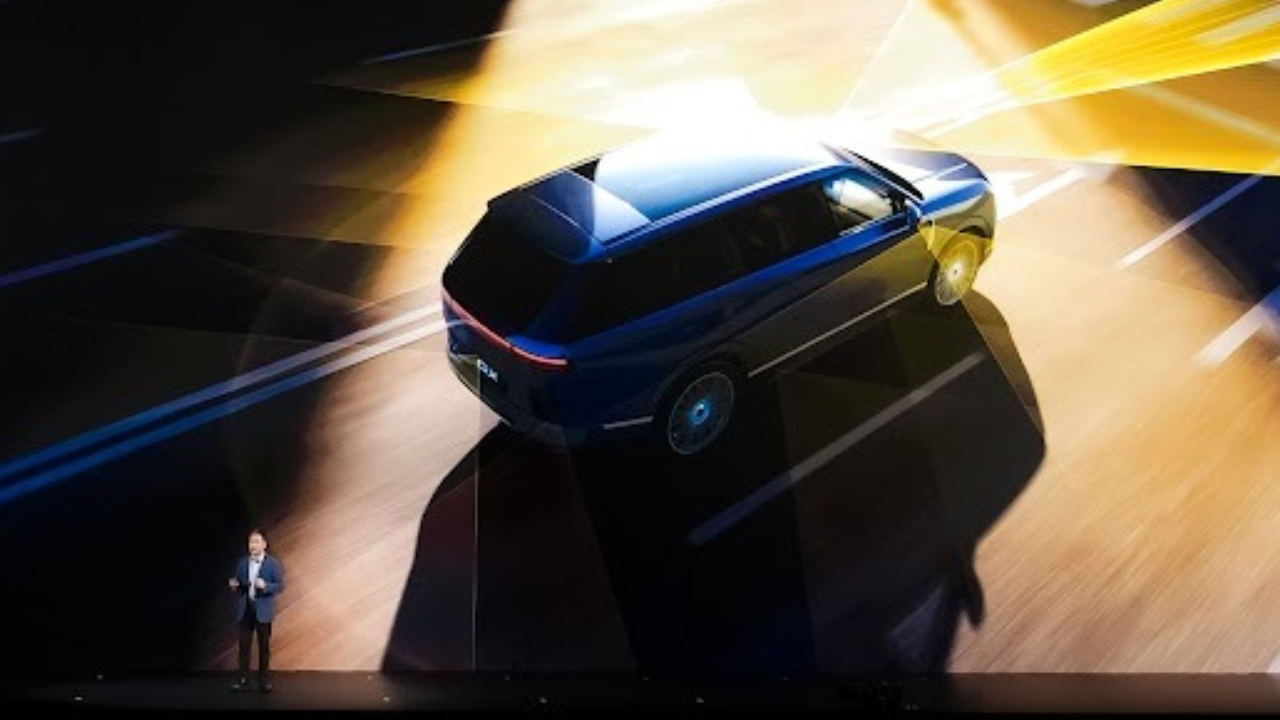
If you own an eligible XPENG vehicle, you are getting a huge over-the-air (OTA) update this December. They are rolling out VLA 2.0 Lite for older dual-NVIDIA setups. Plus, they are unleashing a software-only update that unlocks 5C-to-6C fast charging. Zero hardware modifications. Just a cheeky software patch, and your car suddenly charges faster. They’re also adding Turing AI Co-driving, which adapts deceleration and energy regeneration so smoothly that it boosts your real-world urban driving range by 12.4%. That is practically free electricity, courtesy of some very clever coding nerds.
Naturally, they aren’t keeping this wizardry to themselves in China. By the first half of 2027, they are rolling out Navigation Guided Pilot (NGP) globally. Then, in the second quarter of 2027, they are pulling the classic modern business move – switching new buyers to a paid Turing AI driving subscription. If you buy before the switch, you get lifetime access. If you wait, well, open your wallet and keep it open. It is the way of the world now. Everything is a subscription. Next, they’ll charge us a monthly fee to use the cup holders.
Enter IRON, The Metal Man
But enough about cars. Let’s talk about the real star of the show. XPENG has built a bloke. Yup, a general-purpose humanoid robot named IRON. Making its first public debut, this metal chap stands 170 centimeters tall, which is exactly 5 feet 7 inches for my American friends. It is packed with three proprietary Turing AI chips delivering a face-melting 2,250 TOPS of computing power. It features 76 degrees of freedom in its body, including 21 degrees in its surprisingly dexterous hands. It also has over 1,500 tactile sensing points covering 80% of its key body zones. It has 360-degree vision and can literally feel how hard it is gripping something – that’s very comforting considering those metal hands could probably snap a golf club in half.
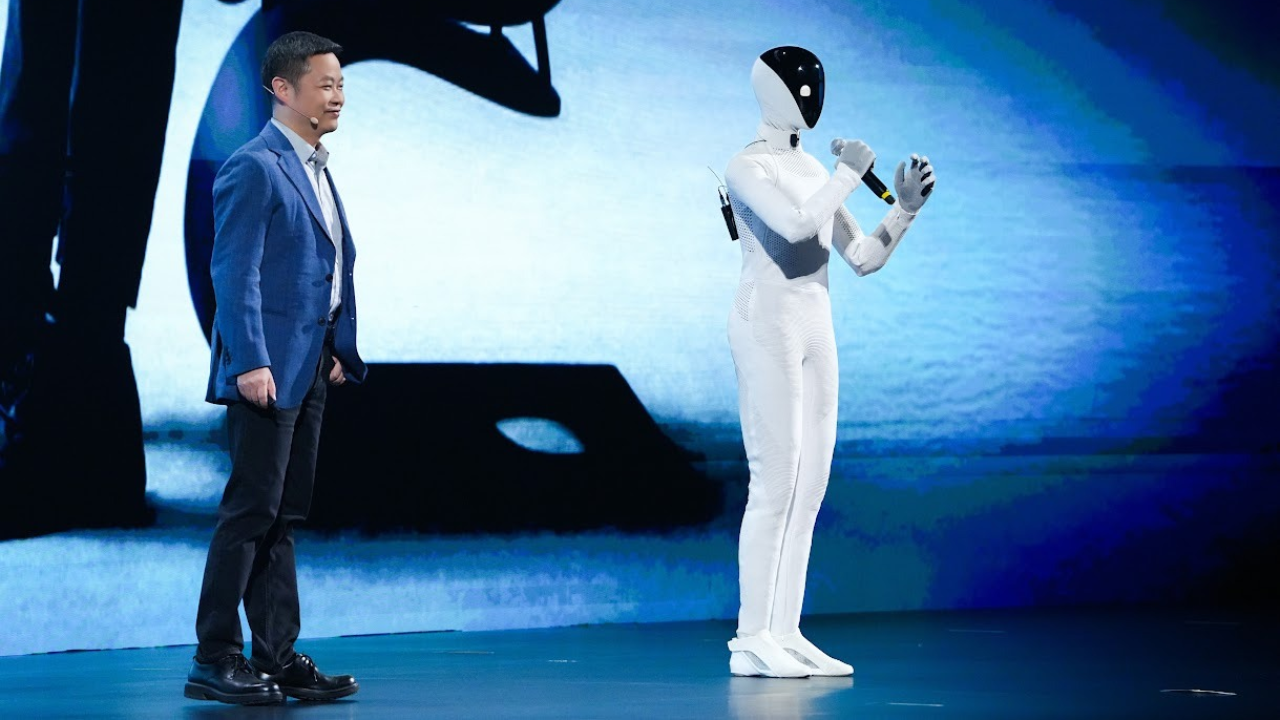
According to XPENG, the day is near when we will wake up, come downstairs, and find a metal bloke making us morning coffee and planning our day. It sounds like something out of a Hollywood movie, but XPENG is dead serious about it. IRON is designed to work. It navigates autonomously, returns to charge itself, and works 24-hour shifts without asking for a tea break or forming a union. XPENG is so confident that they are putting it to work in their own retail stores starting in the first quarter of 2027 as a trainee assistant. You will soon walk into a showroom and be greeted by an android. By the second quarter of 2027, they plan to sell IRON to the public. They haven’t given an exact price yet, but they said it will be comparable to an EV. So, expect to part with anything from $20,000 to $40,000. For a tireless robot butler that never complains, that actually sounds like a bargain.
You might be wondering how they plan to build all these metal workers. Thankfully, they aren’t hand-crafting them in a shed – XPENG has built a 50,000-square-meter Robot Data Factory. That is 538,000 square feet of floor space dedicated to robot training across 250 real-world scenarios. Still struggle to imagine the size of this venture? That’s about seven professional soccer pitches stuffed under one roof, and dedicated to teaching robots how not to trip over the furniture. They have an automated assembly line that makes a shiny new IRON every 2.5 minutes. Every time you boil the kettle, XPENG has made another robot. Mass production officially kicks off in January 2027. I guess the metallic uprising is scheduled for next Tuesday.
The YOYO-01 Robotaxi
If the idea of a robot salesman isn’t futuristic enough, how about a taxi with no driver? Say hello to the YOYO-01. Ready for a 2027 release, this is XPENG’s first purpose-built robotaxi for commercial use. The fascinating thing here is that they have completely ditched LiDAR sensors and high-definition maps. Instead, they are relying entirely on a pure vision stack – cameras and AI reasoning.
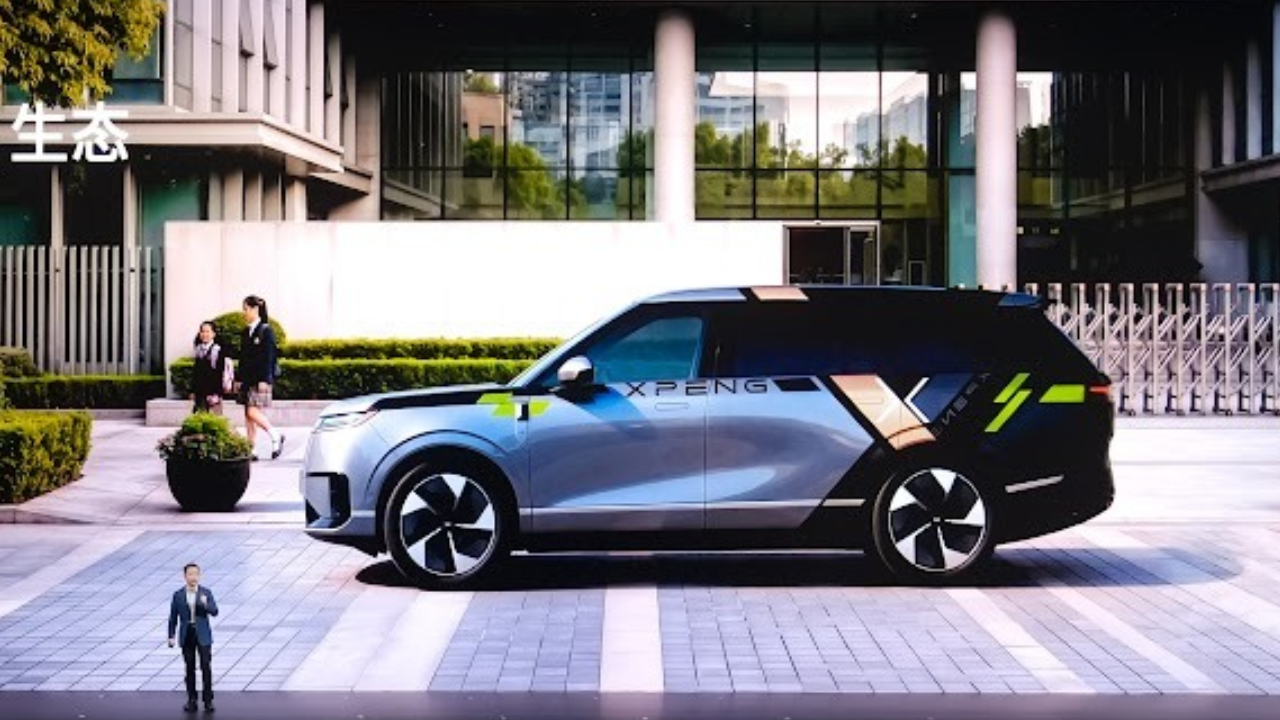
XPENG has already started driverless passenger trials in Guangzhou ahead of public demonstration operations by the end of 2026. There is no safety driver – just you and a computer hurtling down the road. They plan to offer these as turnkey solutions to global mobility operators. So, rather than running the fleets themselves, they are selling the cars and software to anyone who wants to run a taxi business.
Taking to the Skies
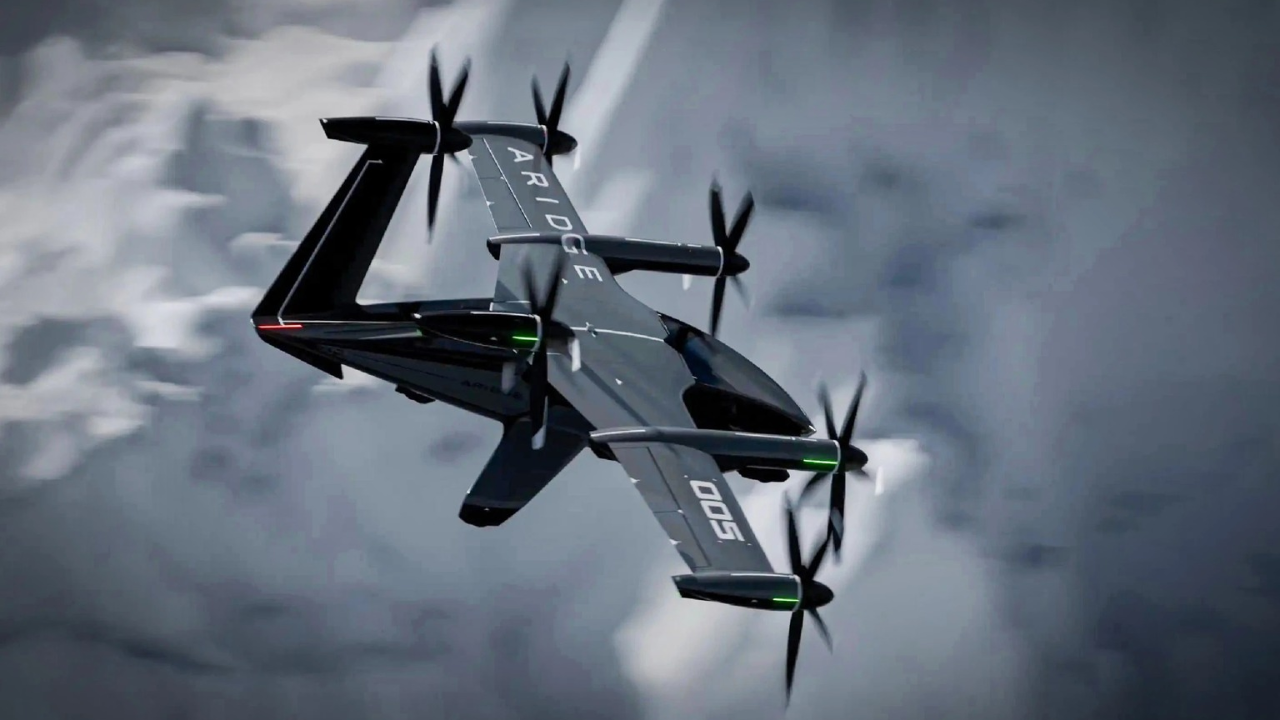
But just when I thought we were done, XPENG looked at the sky and said, “We need to put some traffic up there, too.” Their aviation subsidiary, ARIDGE, has been incredibly busy. I’ve always been a bit skeptical (and yet fascinated) about flying cars. Historically, they’ve been terrible cars and terrible airplanes. But XPENG’s approach feels different. ARIDGE scored Type Inspection Authorization and completed certification flight tests for their piloted eVTOL aircraft. They also have the A868 hybrid-electric tiltrotor, which has completed its full transition flight test. This beast targets a range of 500 kilometers (that’s 311 miles) and a top speed of 360 km/h (about 224 mph). It is properly fast, and it might be the solution to beat the morning commute.
ARIDGE has already signed a partnership with the United Arab Emirates to establish a low-altitude regulatory sandbox. This means they are going to figure out the rules for flying cars while actually flying them. It is a brilliant move. The UAE loves shiny new tech, and XPENG gets a huge playground to prove their flying machines won’t fall out of the sky and land on a camel. If you want to feel like a character from a sci-fi movie, book a flight to Dubai in a couple of years.
The Big Picture
No two ways about it – what XPENG is doing here is remarkable. They aren’t a car company anymore. They are a physical AI company. By sharing the same software brain across cars, humanoid robots, and flying vehicles, they are accelerating development at a pace that’s hard to keep up with. It really is the ultimate ecosystem. Your car, your taxi, your flight, and the robot that sells you all three are thinking with the exact same architecture. I gotta say it is wildly ambitious, technically shocking, and positively insane.
I’ve driven a lot of electric cars over the years. Some are brilliant, and some are… not so exciting. But XPENG isn’t JUST making another car. They are trying to rewrite how we interact with machines on the ground, in the air, and in our homes. Will it all work perfectly on day one? Probably not. I fully expect a robot to drop a tray of drinks or a robotaxi to get confused by a plastic shopping bag in the wind. But the brass pair of… bravery to push all this tech into mass production in 2027 earns a lot of respect, at least from me. Keep your eyes peeled – the future is arriving, and a robot is bringing its luggage.